Pullman Danang Beach Resort - Luxury hotel - Hai Van Pass, Da Nang 2026: A Guide to Sightseeing and Hiking

Pullman Danang Beach Resort
Languages

 en
en


en
- English
- 简体中文
- 日本語
- 한국어
- Tiếng Việt
- See this hotel on all.accor.com or brand website in other languages :
Hai Van Pass, Da Nang 2026: A Guide to Sightseeing and Hiking
From central Da Nang, it’s about 20–25 km along National Highway 1A to the foot of the pass, then another 45–60 minutes to clear the pass itself and reach roughly 500 m in elevation, where the Truong Son mountain range drops straight into the sea and a fortified gate built in 1826 still stands at the top. Hai Van Pass runs about 20–21 km, connecting Da Nang with Hue, and since June 2, 2026, the Hai Van Quan relic has officially started charging admission.
This guide covers the route, transport options, the stops worth making, 2026 ticket prices, the best time to set off, food along the way, and a one-day itinerary with travel time already built in.
Why Is Hai Van Pass Called “The Greatest Pass Under Heaven”?
That title is carved right into the gate facing Da Nang, and it points to three things at once: rugged terrain, strategic position, and the view from the summit.
- Location: Between Da Nang and Hue
- Length: ~20–21 km
- Elevation: ~500 m above sea level
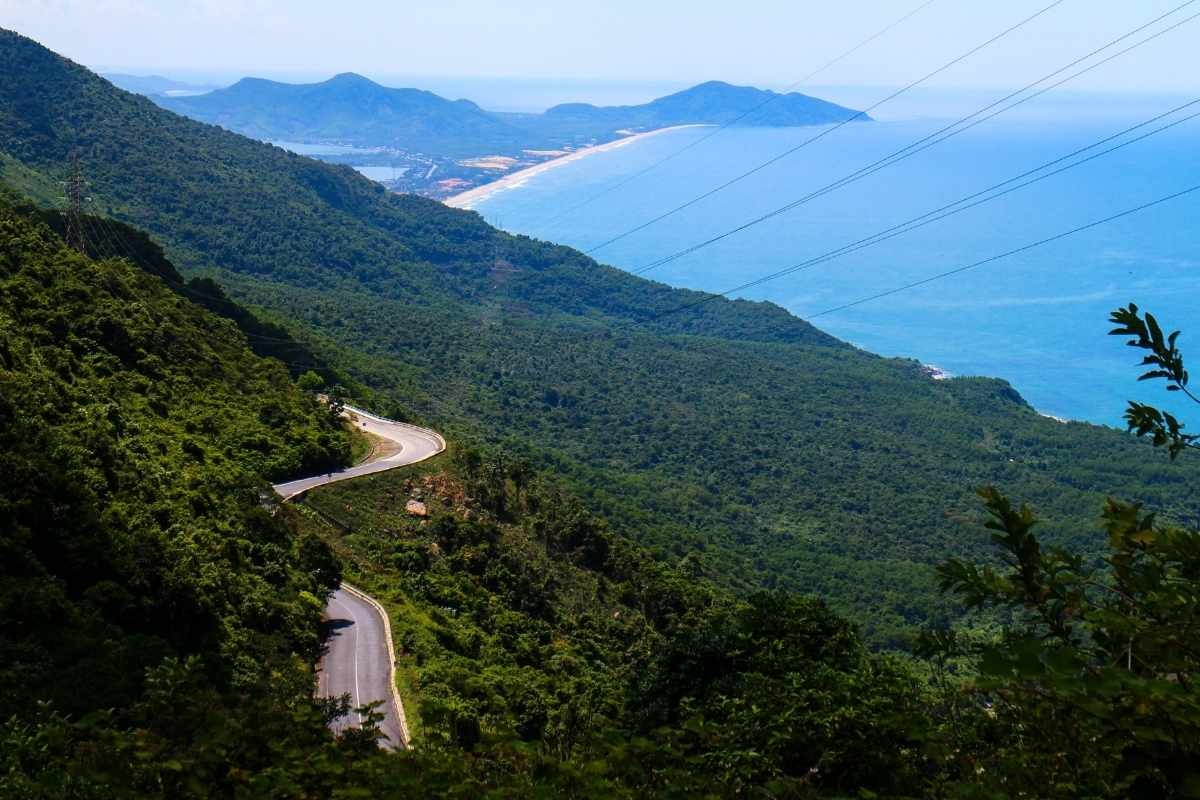
This is one of the rare stretches of central Vietnam where the Truong Son mountains run almost straight into the sea, forming a route that’s both a geographic boundary and a climate one. The name “Hai Van” means “sea clouds,” a reference to the layers of mist and fog that often blanket the summit while the coast stretches out below toward the South China Sea.
At the top, Hai Van Quan was built under Emperor Minh Mang in 1826 to control the north-south imperial road and guard the southern gateway to the Hue capital. The complex includes a system of ramparts and defensive positions, and was recognized as a national relic by the Ministry of Culture, Sports and Tourism in 2017.
On a clear day, from the summit you can see Da Nang Bay to the south and Lang Co Bay to the north from the same spot. That’s part of why Hai Van has held onto its title for two centuries.
When Is the Best Time to Visit Hai Van Pass?
The pass can be explored year-round, but weather has a direct effect on visibility, road grip, and the whole outdoor experience.
- Best time of year: March through August
- Best time to set off: Around 6:00–7:00 AM, when the road is still quiet and fog hasn’t thickened on the summit yet.
- Good time for late-afternoon views: Around 3:00–4:00 PM, still bright enough for photos while leaving time to clear the pass before dark.

The pass sits at roughly 500 m on the Bach Ma range within the Truong Son system, forming a natural climate boundary — so fog and cloud can settle over the summit even on a sunny day down in the city. Check the forecast on the day you plan to go, rather than relying on the season alone.
The Most Convenient Ways to Get to Hai Van Pass
There are four main ways to reach Hai Van Pass, each suited to a different kind of trip.
Motorbike
A motorbike is the best option if you want full control over where and how long to stop. In exchange, the pass has plenty of steep grades and continuous curves, so it suits riders already comfortable with long-distance or mountain roads.
If you’d rather have a guide along, guided motorbike tours of Da Nang offer a safer way to start.
Route from Da Nang: Head north on National Highway 1A for about 20 km to reach the foot of the pass. Clearing the pass itself takes 45–60 minutes, not counting stops for sightseeing and photos.
Reference rental cost: VND 80,000–180,000/day for a manual or automatic scooter in Da Nang, depending on the model and rental company.
Safety notes: Check brakes, tires, and fuel before starting the climb. Always wear a helmet, and avoid riding at night, especially when heavy rain or fog is limiting visibility.

Private Car or Taxi
A private car or taxi is a sensible choice for families, small groups, older travelers, or anyone who wants to enjoy the pass without driving mountain roads themselves.
Confirm this before setting off: Ask the driver to take the pass road, not the Hai Van Tunnel. Most intercity vehicles take the tunnel to save time, and only the pass road passes by Hai Van Quan.
When booking: Agree in advance on which stops you want, how long to wait at each one, and whether you’re continuing on to Lang Co or heading back to Da Nang. Settling these three points up front clarifies the price and avoids arguing partway through the trip.

Guided Tour or Motorbike With a Driver
If you want the pass experience without driving mountain roads yourself, a guided tour or a local driver on a motorbike is worth considering.
Best for: First-time visitors to Hai Van, international travelers, and anyone who wants the road-trip feeling without personally handling 40 km of curves.
The itinerary can combine: Hai Van Quan, stops along the pass, Lang Co, Lap An Lagoon, or continuing on to Hue, depending on the program.
When booking a tour: Ask specifically about the vehicle, pickup and drop-off points, how long you’ll stop at Hai Van, what’s included in the price, and — most importantly — whether the route takes the pass road rather than the tunnel.
Da Nang – Hue Train
The train gives you a view of Hai Van from the mountainside without having to handle a single curve. The rail line runs along the cliff face, opening up views of the Truong Son mountains, the sea, and the Lang Co area for the whole ride.

The “Central Vietnam Heritage Connection” tourist train between Da Nang and Hue takes about 3 hours and runs straight through the Hai Van Pass area. Vietnam Railways operates services in both directions, with a stop at Lang Co Station.
Which side to sit on: Heading from Da Nang to Hue, take a seat on the right side (facing the direction of travel) for the sea view. Heading from Hue back to Da Nang, take the left side.
How to buy tickets: At the station, through an agent, or via Vietnam Railways’ official channels. Book ahead for weekends, peak season, and public holidays.
Worth noting: The train is best for taking in Hai Van from a distance rather than getting you to Hai Van Quan or the roadside stops. If you want both, take the train one way and a car the other.
Top Sights and Hikes Not to Miss at Hai Van Pass
The five spots below are spread across both sides of the pass, from the relic at the summit to a 700 m walking route down to a stone arch bridge over a century old.
1. Hai Van Quan
Location: Chan May – Lang Co, Hue (At the summit of Hai Van Pass, on the border between Hai Van Ward in Da Nang City and Chan May – Lang Co Commune in Hue City.)
Elevation: ~496 m above sea level.
Admission: VND 70,000/person/visit, applying to both Vietnamese and international visitors from June 2, 2026 through December 31, 2028.
- Free for children under 13 and certain other groups under current regulations.
- 50% off for seniors, low-income households, residents of Da Nang and Hue, and eligible student groups.
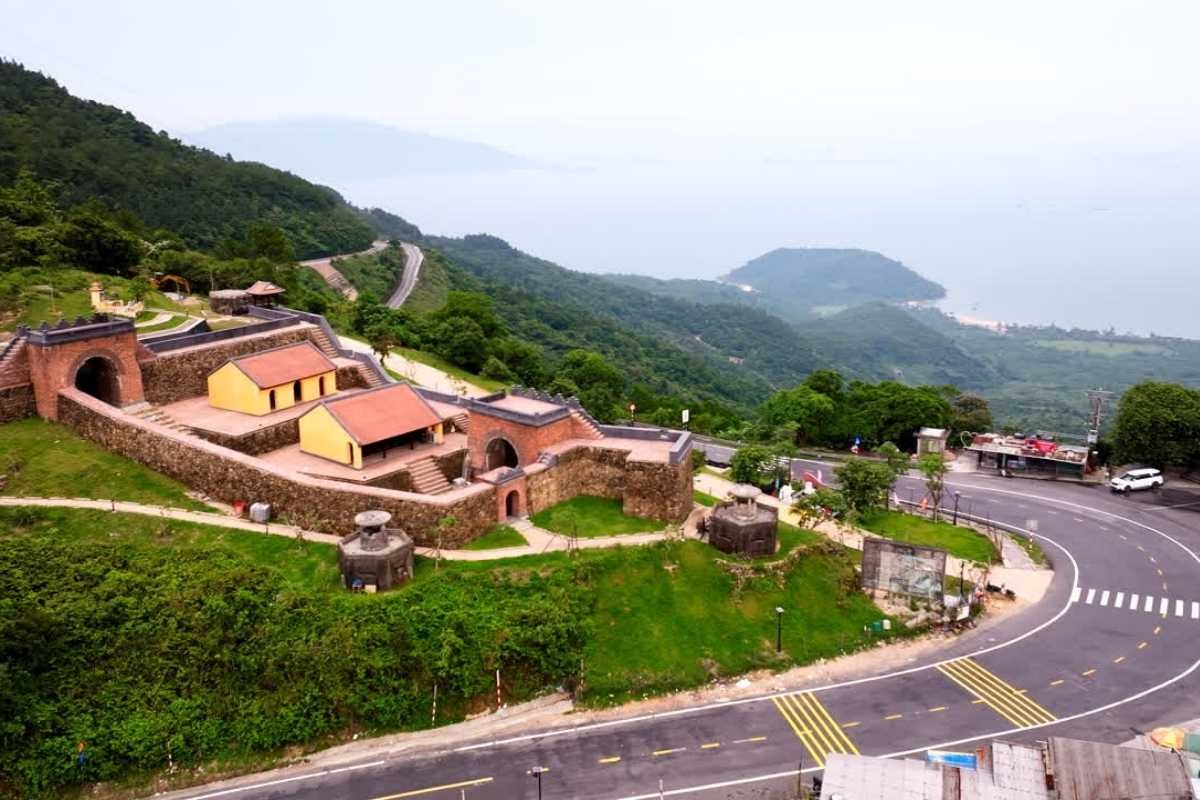
The experience: Visit the two ancient gates, walk around the restored ramparts and defensive structures, learn about Hai Van Quan’s strategic role, and look out toward Da Nang Bay or Lang Co on a clear day.
Hai Van Quan sits near the highest point of the pass and is the clearest historical landmark on the route between Da Nang and Hue. The structure standing today was built in 1826 and once controlled the north-south imperial road. Following restoration, the relic reopened on August 1, 2024, with its two gates, the Tru So barracks, the Vu Kho armory, stone walls, and several restored defensive features. Plan on at least 45 minutes here if you want to see the whole site rather than just take photos at the gate.
2. Turtle Rock Outcrop
Location: Hai Van Pass, Hai Van, Da Nang (Near the first bend on the climb up Hai Van Pass from the Da Nang side)
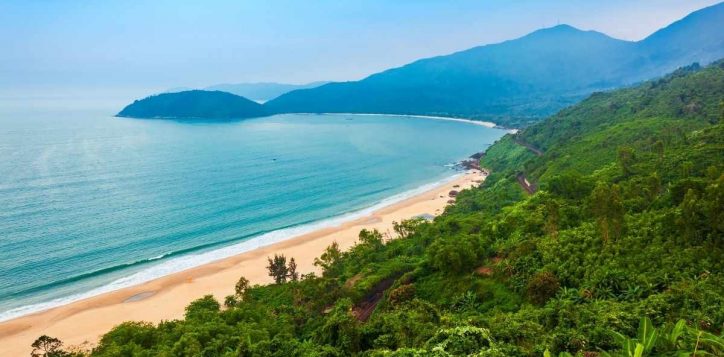
Highlight: A natural rock outcrop jutting out from the mountainside, opening up a wide view of Da Nang Bay, Son Tra Peninsula, and the sea below the pass.
The experience: Stop for the full mountain-and-sea view, take landscape photos, and watch the Hai Van road curve away below from up high.
Note: This is natural terrain, not a stop protected by railings. Don’t get too close to the edge, especially in rain, strong wind, or fog.
Turtle Rock is the standout viewpoint on the Da Nang side, and also the earliest stop on the drive up. Its appeal comes from timing: just a few minutes into the climb, you can already see the whole bay, the forest, and the road still ahead of you.
3. The Hairpin Bend of Hai Van Pass
Location: Hai Van Pass, Hai Van, Da Nang (The well-known hairpin bend near the summit of Hai Van Pass, around Km 905+300, is the stretch most travelers recognize)
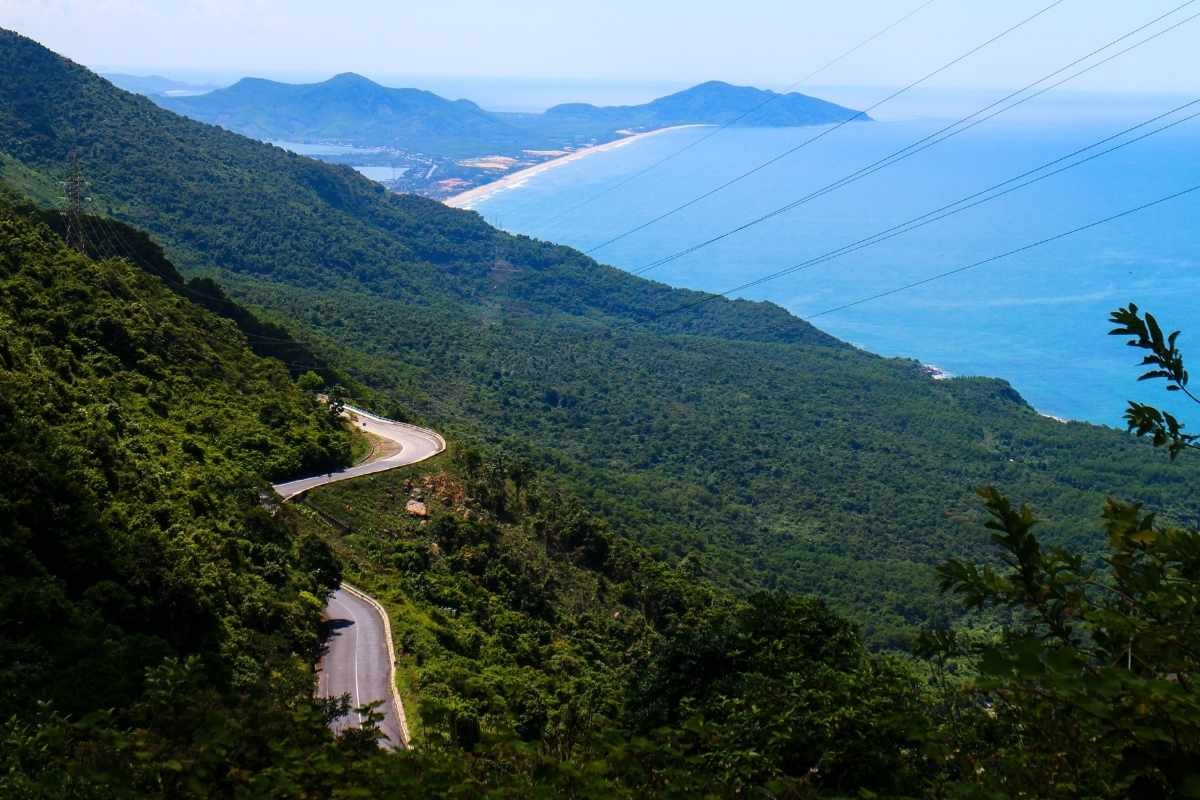
Highlight: A tight bend hugging the mountainside, capturing the winding terrain that gave Hai Van Pass its reputation.
The experience: Take in the full view of the road curving along the mountainside, combining the road-trip feel with photos taken from safe pull-off points.
Safety note: Don’t stop your vehicle or stand for photos right at the bend itself. This is still an active road used by cars, trucks, and motorbikes, and the Km 905+300 area has been flagged by local authorities as a traffic-safety hotspot.
The run of consecutive curves is a big part of what makes riding Hai Van feel like an achievement, and the hairpin bend near the summit shows off the steepest grade most clearly. But this is first and foremost an active national highway, not a photo stop, so take in the view from a wide enough pull-off rather than standing in the road.
4. The Lang Co Bay Viewpoint
Location: On the northern side of the pass, along the descent from Hai Van Quan toward Lang Co.
Highlight: A high vantage point over Lang Co Bay, its curved coastline, and Lap An Lagoon sitting behind the residential area.
The experience: Take a break, take in the full view of Lang Co from the mountainside, and photograph the transition from Hai Van’s mountains down to Hue’s lagoon coast.
Best timing: A clear, low-fog day, when the view down to Lang Co and Lap An Lagoon is sharper.
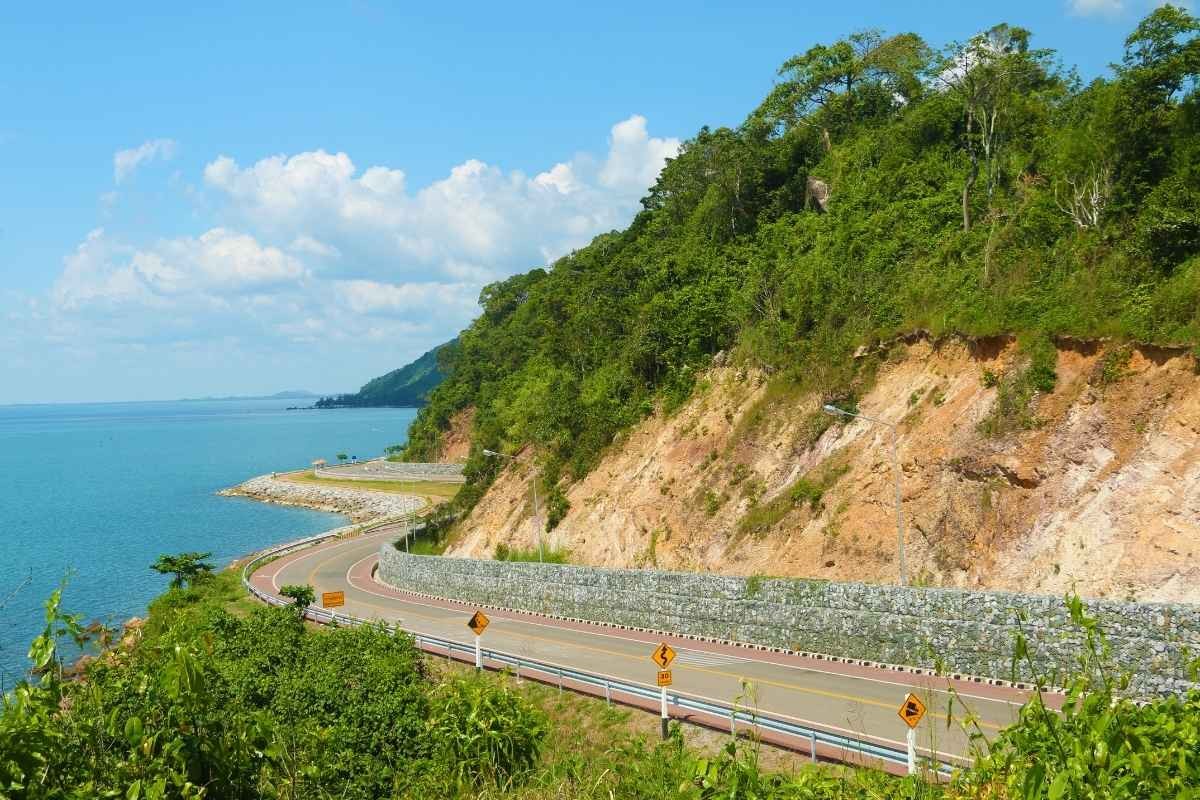
Note: There’s no single, purpose-built viewpoint here. The northern side has several pull-offs and roadside stalls, and you should only stop somewhere wide enough not to block traffic.
Once you clear Hai Van Quan and start heading down the northern side, the scenery changes noticeably. Da Nang Bay gives way to an open expanse of sea and lagoon, and this is a natural transition point if you’re planning to eat in Lang Co or continue on to Hue.
5. North Hai Van Station – Don Ca Arch Bridge
Location: On the northern side of Hai Van Pass, along the North-South rail line heading toward Lang Co.
Highlight: The Don Ca Arch Bridge, built between 1902 and 1906, with four stone arches spanning a valley between forest and stream.
The experience: Walk through mountain and forest scenery, watch the rail line that cuts through Hai Van, and see the century-old arch bridge sitting in the valley.
Approximate walking distance: ~700 m from North Hai Van Station to the path down to the Don Ca Arch Bridge.
Difficulty: Moderate — longer and harder to reach than the roadside viewpoints, with some slopes, small steps down, and natural terrain.
Time needed: Set aside about 1–2 hours for the whole approach, walk, sightseeing, and return. The actual time depends on where you park, trail conditions, and your own pace.
Safety note: The North-South rail line is still active. Don’t walk on the tracks, don’t enter the tunnel, don’t stand on the rail bridge for photos, and always follow on-site signals and signage. If you don’t know the area, go with someone familiar with the route rather than finding your own way.
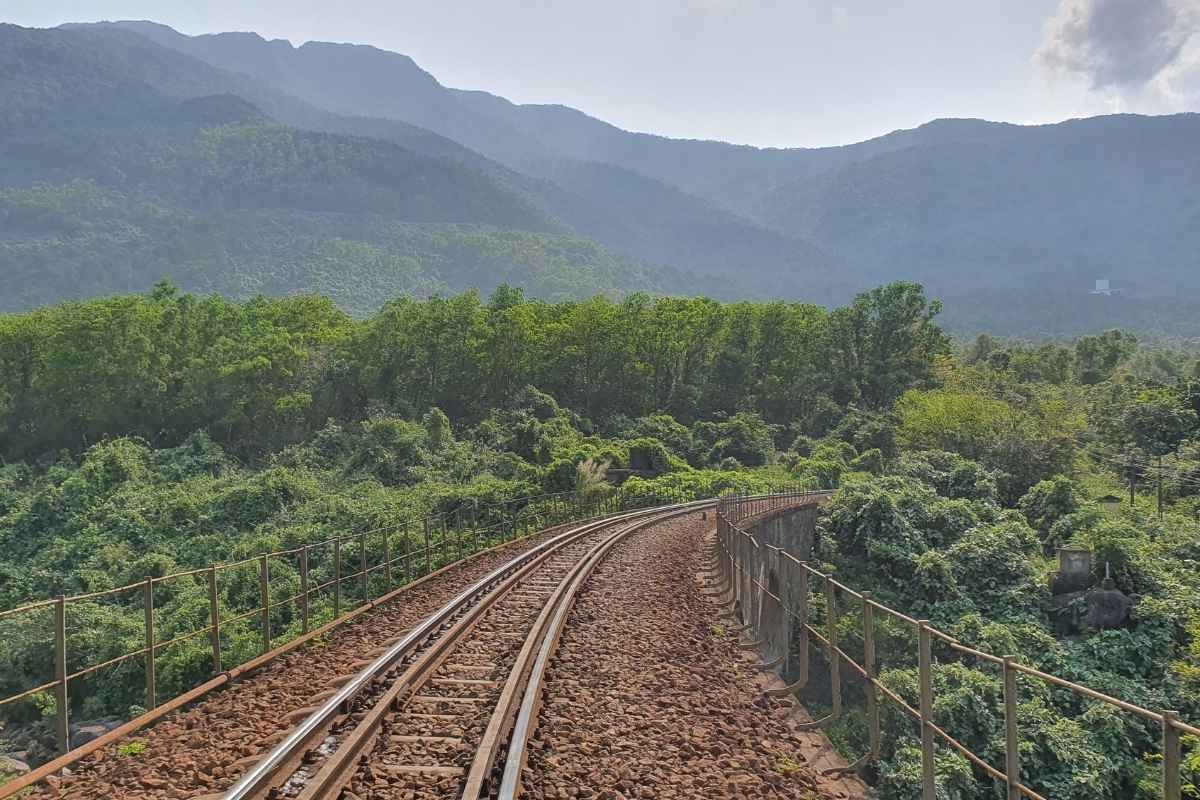
This spot is for anyone who wants a genuine hiking element added to the trip. The rail line through Hai Van was built in the early 20th century and is still in use, with the Don Ca Arch Bridge sitting between the valley, the forest, and a stream below. Because this area is directly tied to active rail infrastructure, treat it as an expedition that needs preparation, not a standardized tourist trail.
Where to Eat While Exploring Hai Van Pass
The two ends of the pass offer two different food scenes: the fishing village of Nam O on the Da Nang side, and the lagoon area of Lang Co on the Hue side.
Nam O fish salad (goi ca Nam O): A specialty of the Nam O fishing village right at the foot of the pass on the Da Nang side. Fresh fish is carefully prepared and mixed with roasted rice powder, served with fresh herbs and a bold dipping sauce, available in both dry and wet versions. It’s a sensible meal before heading up the pass or on the way back to the city.
Nam O fish-sauce coffee: An unpredictable drink from the Nam O area, using processed fish sauce combined with coffee in a way similar to salt coffee, giving a salty, aromatic, sweet-finishing taste. Worth trying a cup, whether you end up liking it or not.
Hue-style banh uot: Thin steamed rice sheets served with grilled meat or other fillings, plus fresh herbs and dipping sauce. This one suits you if your trip continues from Hai Van down to Lang Co or further toward central Hue.
Lang Co seafood and fermented oyster sauce (mam so): Once you’re down on the northern side, Lang Co is the place to stop for local seafood and to try mam so, a long-standing specialty of this coastal area. Mam so is made from fresh oysters fermented with seasoning, usually eaten with rice, and also makes a compact gift to take home.

A One-Day Itinerary for Exploring Hai Van Pass
The itinerary below fits Hai Van Quan, a hiking segment, and lunch in Lang Co into about 10 hours, with travel time already built in.
Morning – Conquering the Summit and Hiking
07:00 – 07:30: Set off from Da Nang by motorbike or car, heading toward Nam O and starting the climb up Hai Van Pass.
08:00 – 09:00: Visit Hai Van Quan, walk around the relic, see the two ancient gates, and look toward Da Nang or Lang Co on a clear day.
09:00 – 09:30: Continue through Hai Van’s signature hairpin bends, stopping only at safe pull-offs for views and photos.
09:30 – 11:30: Head to the North Hai Van Station area and spend time on the walk down to the Don Ca Arch Bridge. A 2019 Da Nang Tourism source puts the distance from the station to the path down to the bridge at around 700 m, though this isn’t a standardized tourist trail and the rail line remains active.
Midday – Resting and Enjoying Lang Co’s Food
12:00 – 13:30: Head down to Lang Co, have lunch with local seafood, and rest after the morning’s hiking.
If you have time, stop by Lap An Lagoon before heading back up toward Hai Van. This break matters, especially if your morning involved a lot of walking rather than just sitting on the bike or in the car.

Afternoon – Sightseeing and Heading Back to Da Nang
14:00 – 14:30: Set off from Lang Co back up the pass, stopping at the Lang Co Bay viewpoint if weather and visibility allow.
15:00 – 15:30: Stop by Turtle Rock or another safe viewpoint on the Da Nang side to take in the bay and rest.
15:30 – 16:30: Descend the pass toward Da Nang. Late-afternoon light makes for a beautiful view of the bay, but don’t lock in a fixed “sunset chase” while you’re still navigating the pass road.
Around 17:00: Arrive back at your hotel or resort, wrapping up the day.
An A-to-Z Guide to Riding Hai Van Pass Safely
Hai Van is an active national highway, not a self-contained tourist attraction, so preparation determines most of how the trip goes.
Before You Head Up Hai Van Pass
Check the weather: Look at the forecast right before you set off, and postpone if there’s heavy rain, a storm, or thick fog, since visibility and road grip drop noticeably.
Check your vehicle: For a motorbike, check the brakes, tires, lights, fuel, and mirrors before starting the climb. The Da Nang Tourism portal recommends filling up before setting off.
Dress appropriately: Wear shoes with good grip if hiking is part of the plan, and pack a light jacket, since the summit area is windy and cool in the early morning.
Water and snacks: Bring enough water, especially if you plan to walk to areas away from the main road or spend several hours outdoors.
Phone and a power bank: Charge your phone fully, download any maps you’ll need in advance, and bring a power bank if your trip includes hiking or runs all day.

Notes for Driving or Riding the Pass
Keep an appropriate speed: Slow down before bends, keep distance from the vehicle ahead, and never overtake where visibility is limited.
Use a low gear going downhill: On a motorbike, shift to a low gear to use engine braking rather than relying entirely on the brakes. This is also the Da Nang Tourism portal’s own recommendation.
Don’t stop at the bend itself: Only stop in areas wide enough to be safe. Da Nang authorities have noted improper stopping by visitors at crowded points on the pass and have stepped up enforcement.
Avoid riding the pass too late: Don’t start or extend your trip once it’s already dark, especially with fog or rain around. Da Nang Tourism recommends avoiding the pass at night or in thick fog.
Notes for Walking and Hiking
Stick to clearly marked routes: Don’t turn off onto a trail or into forested areas if you don’t know the path or how to get back.
Don’t treat the railway as a hiking trail: Around North Hai Van Station and the Don Ca Arch Bridge, the North-South rail line is still in active use. Don’t walk on the tracks, stand on the bridge, or enter the tunnel for photos.
Start early and turn back before late afternoon: Schedule the hiking portion for the morning, so you have buffer time if you move slower than planned.
Don’t hike alone on hard-to-reach routes: For areas without a standardized trail, first-timers should go with someone who knows the terrain or a local guide.
Keep your distance from ledges and steep slopes: Natural viewpoints like Turtle Rock don’t always have railings, so take extra care in rain, strong wind, or fog.
Rest and Recover After Hai Van at Pullman Danang Beach Resort
After a day riding the pass or hiking, Pullman Danang Beach Resort sits right on Bac My An Beach, about 30 km south of Hai Van Pass. You won’t need another trip into the city center. The spa, pool, beach, and dinner are all within the resort grounds.
Recover at The Nang Spa: Massage, body treatments, facials, and a Jacuzzi for legs that have spent the day on a bike or climbing slopes. The spa is open 09:00–22:00 and takes its last booking at 20:30. Resort guests get free use of the dry sauna and steam room.
Unwind at the pool and Bac My An Beach: The outdoor, ocean-facing pool suits a light swim or stretching out on a lounger after the trip. Its spot right on Bac My An Beach means you keep that seaside feeling without needing to go anywhere else.
Stretch it out at Fit Lounge: Cardio machines, fitness equipment, yoga mats, and balance balls for stretching after hours in the saddle or car seat. Fit Lounge is open 24/7 and free for resort guests.
Have dinner at Azure Beach Lounge: A seaside setting serving Western dishes with Vietnamese touches. The restaurant serves lunch and dinner from 11:00–22:00, with Happy Hour from 17:00–19:00 — timed almost exactly with when you’d get back under the itinerary above.
For a fuller menu, try Restaurant Epice: Vietnamese and international dishes for families or groups wanting a complete dinner. Lunch and dinner run from 11:30–22:00.
If Hai Van is part of your Da Nang plans, book a room at Pullman Danang and arrange spa or dinner reservations ahead of time, so the next day starts with the beach instead of another road trip. Check current room offers before locking in your dates.
Access
Pullman Danang Beach Resort ☆☆☆☆☆
101 Vo Nguyen Giap Street, Ngu Hanh Son Ward , 550000 Danang
Vietnam
Tel: +84 236 395 8888
Fax: +84 236 395 1898
Email:
H8838@accor.com